
Assessment of Vision and Diagnosis of Refractive Errors
The refractive examination is a fundamental test for evaluating vision and diagnosing potential refractive errors, which affect a person’s ability to see clearly. During the exam, various conditions are assessed that may require correction with glasses or contact lenses.
Diagnostic Capabilities of the Refractive Examination
The refractive examination aims to detect the following refractive errors:
- Myopia (Nearsightedness): Myopia is a condition where a person can see nearby objects clearly but has difficulty seeing distant objects. It is caused by excessive refraction of light in the retina.
- Astigmatism: Astigmatism causes image distortion due to an irregular curvature of the cornea or the lens. This results in blurred or distorted vision at all distances.
- Hyperopia (Farsightedness): In hyperopia, distant objects may appear clear, while nearby objects are blurry. It is usually caused by an eye that is too short or light that is not refracted strongly enough onto the retina.
- Presbyopia: Presbyopia refers to the natural aging process of the eye, which leads to difficulty seeing close objects, usually after the age of 40, due to the loss of flexibility of the eye’s lens.
Procedure of the Refractive Examination
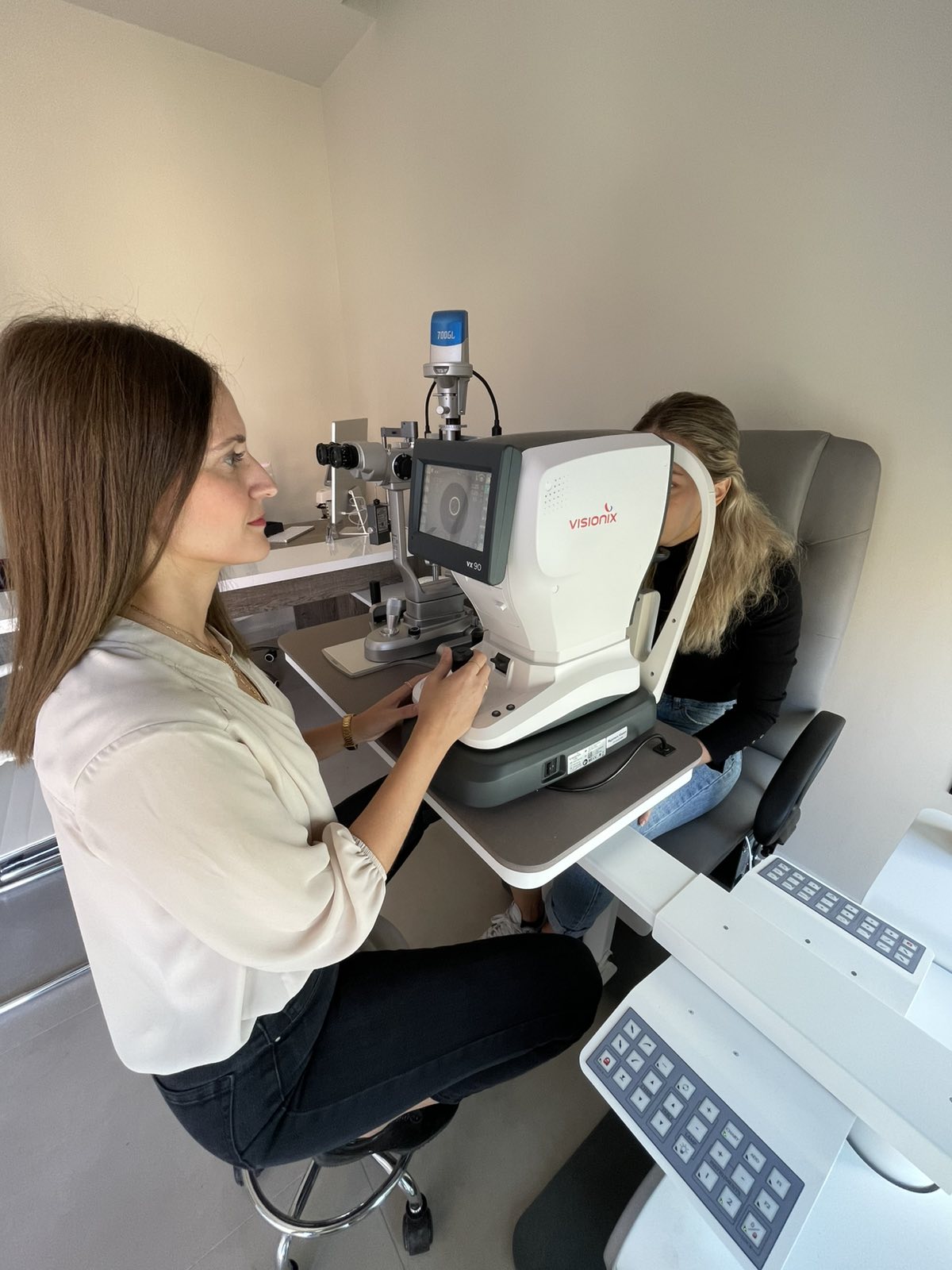
The process begins with measuring the patient’s refraction, which is performed using an automatic refractometer—a technology that uses a computer to precisely measure how light refracts through the eye. This allows the ophthalmologist to determine whether a refractive error is present and how severe it is.
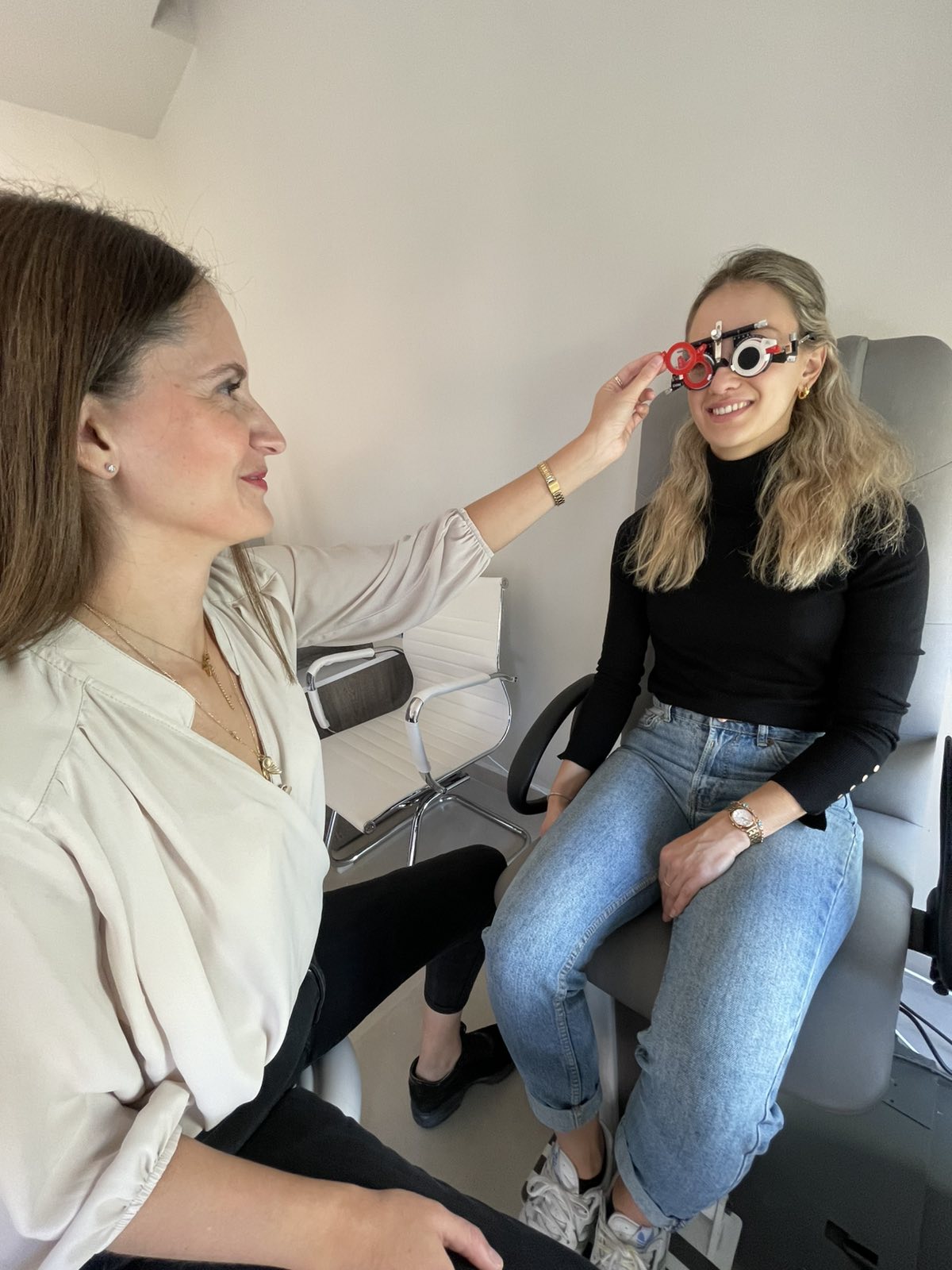
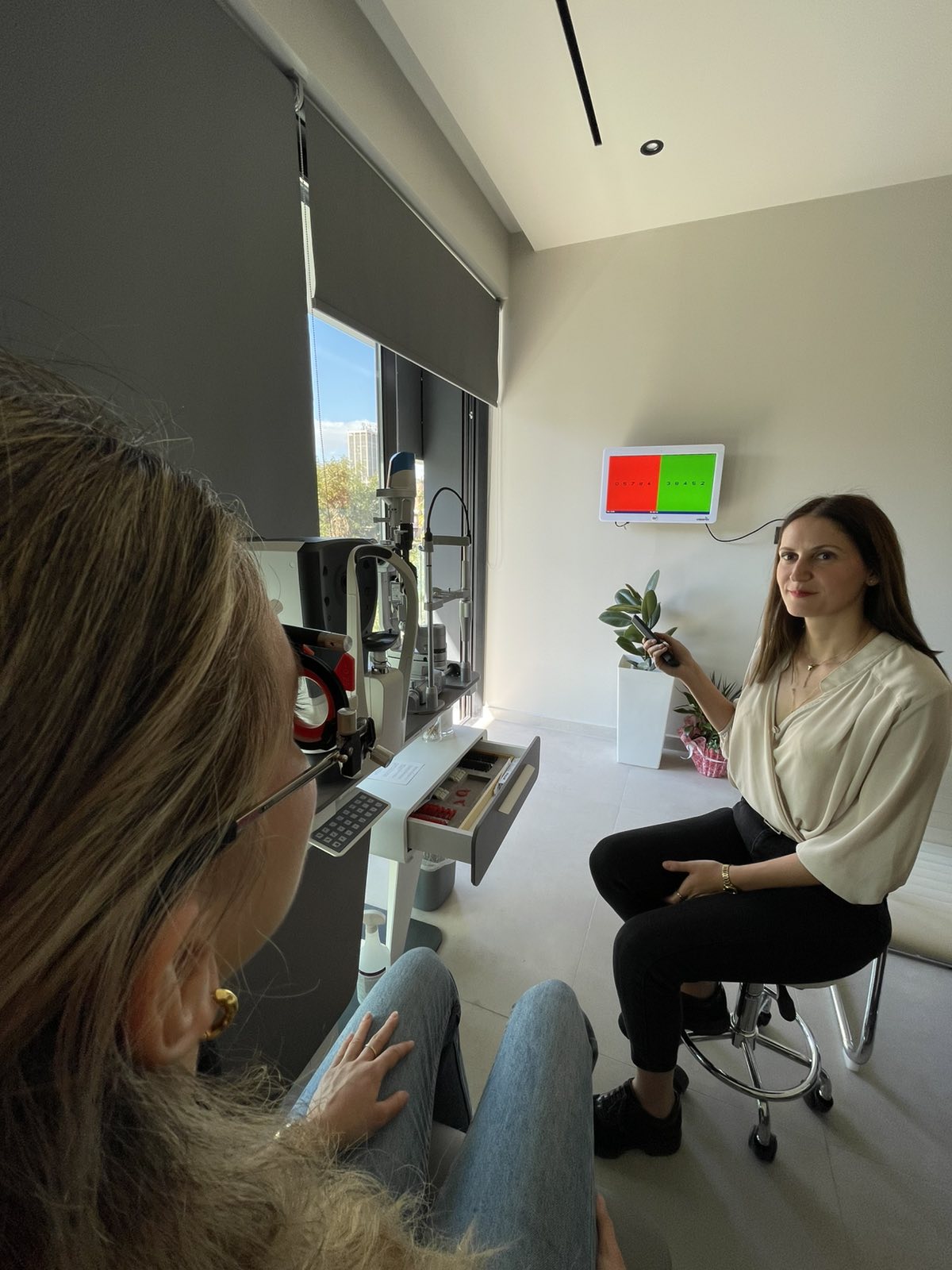
If a refractive error is detected, the doctor proceeds with the use of trial lenses to determine the exact prescription needed to correct the patient’s vision. The goal is to find the lens power that allows the patient to achieve optimal visual acuity.
Examination in Children
For children, the procedure requires some additional steps, as young children may not be able to cooperate as easily as adults. To accurately diagnose refraction, special eye drops are used to induce mydriasis (dilation of the pupil), and a retinoscope is used—an instrument that helps detect refractive errors without requiring the child’s cooperation.
The refractive examination is a safe, quick, and effective procedure that enables the early diagnosis of refractive problems and proper vision correction, thereby improving the patient’s quality of life.
Διαθλαστικός έλεγχος – Αναστασία Τσιώγκα
Διαθλαστικός έλεγχος – Αναστασία Τσιώγκα
Διαθλαστικός έλεγχος – Αναστασία Τσιώγκα