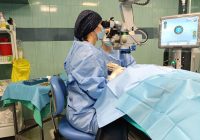

Quick and Painless Treatments for Eye Conditions
Minor procedures in the field of ophthalmology include treatments performed to remove foreign bodies, surgically excise chalazia, eyelid or conjunctival cysts, and papillomas. These are minimally invasive procedures, typically carried out under local anesthesia, offering patients rapid relief and fast recovery.
Procedure of Minor Interventions
Removal of foreign bodies from the eye is one of the most common minor procedures. It is performed when a foreign object, such as dust, glass, or metal, enters the eye and cannot be removed by simple means. Using specialized tools and local anesthesia, the ophthalmologist removes the foreign body without causing pain or further damage to the eye.
Surgical removal of chalazia or eyelid cysts is another routine minor procedure. It is indicated when a gland in the eyelid becomes blocked, resulting in a painful or bothersome lump. The removal is done swiftly using specialized instruments, ensuring a fast recovery for the patient.
Surgical removal of papillomas—benign skin growths that may appear on the eyelid or conjunctiva—is also performed under local anesthesia and is a painless procedure. Papillomas are easily removed, preventing future discomfort or complications.
Advantages of Minor Procedures
Minor procedures are quick, safe, and painless. The use of local anesthesia ensures that the patient feels no pain during the procedure, while specialized instruments allow for accurate and effective treatment.
After the completion of the procedure, the patient can usually return immediately to their daily activities without restrictions or a lengthy recovery period. Complications are extremely rare, and recovery is typically brief, making these procedures a highly effective and preferred option for managing minor eye conditions.
Minor procedures provide a fast and immediate solution for the removal of unwanted growths or foreign bodies, ensuring patients quickly return to their normal routine without difficulty.