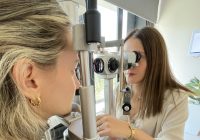

A Vital Examination for Eye Health
Fundoscopy, also known as ophthalmoscopy, is an important ophthalmological examination in which the back of the eye (the fundus) is visually inspected. This examination provides a clear view of the structures located in the posterior segment of the eye, allowing the ophthalmologist to diagnose and assess various conditions that may affect vision health.
Diagnostic Capabilities
Fundoscopy is an extremely useful examination for diagnosing a wide range of eye disorders. Specifically, it enables early detection of:
- Macular Diseases: The macula is the part of the retina responsible for central vision. Fundoscopy can reveal changes related to degenerative conditions such as age-related macular degeneration (AMD).
- Diabetic Retinopathy: This examination is essential for monitoring the damage diabetes may cause to the retina, which can have serious consequences for vision.
- Retinal Detachment: Fundoscopy allows for the detection of one of the most serious eye conditions, which requires immediate medical intervention.
- Suspected Glaucoma: The test can reveal changes in the optic nerve associated with glaucoma, a condition that damages the optic nerve and can lead to vision loss.
- Other Conditions of the Posterior Segment: It can also identify other diseases of the retina and optic nerve, as well as vascular abnormalities affecting the retinal blood vessels.
Fundoscopy Procedure
To perform fundoscopy, special eye drops are used to induce mydriasis—the dilation of the pupil—so that the retina can be thoroughly examined. During the procedure, the patient may experience slightly blurred vision for a short time due to the eye drops, but this is temporary and typically resolves quickly.
Fundoscopy is a safe, non-invasive, and painless examination with high diagnostic value. It is recommended on a regular basis, especially for individuals at increased risk for the conditions mentioned above, to help monitor and maintain eye health.